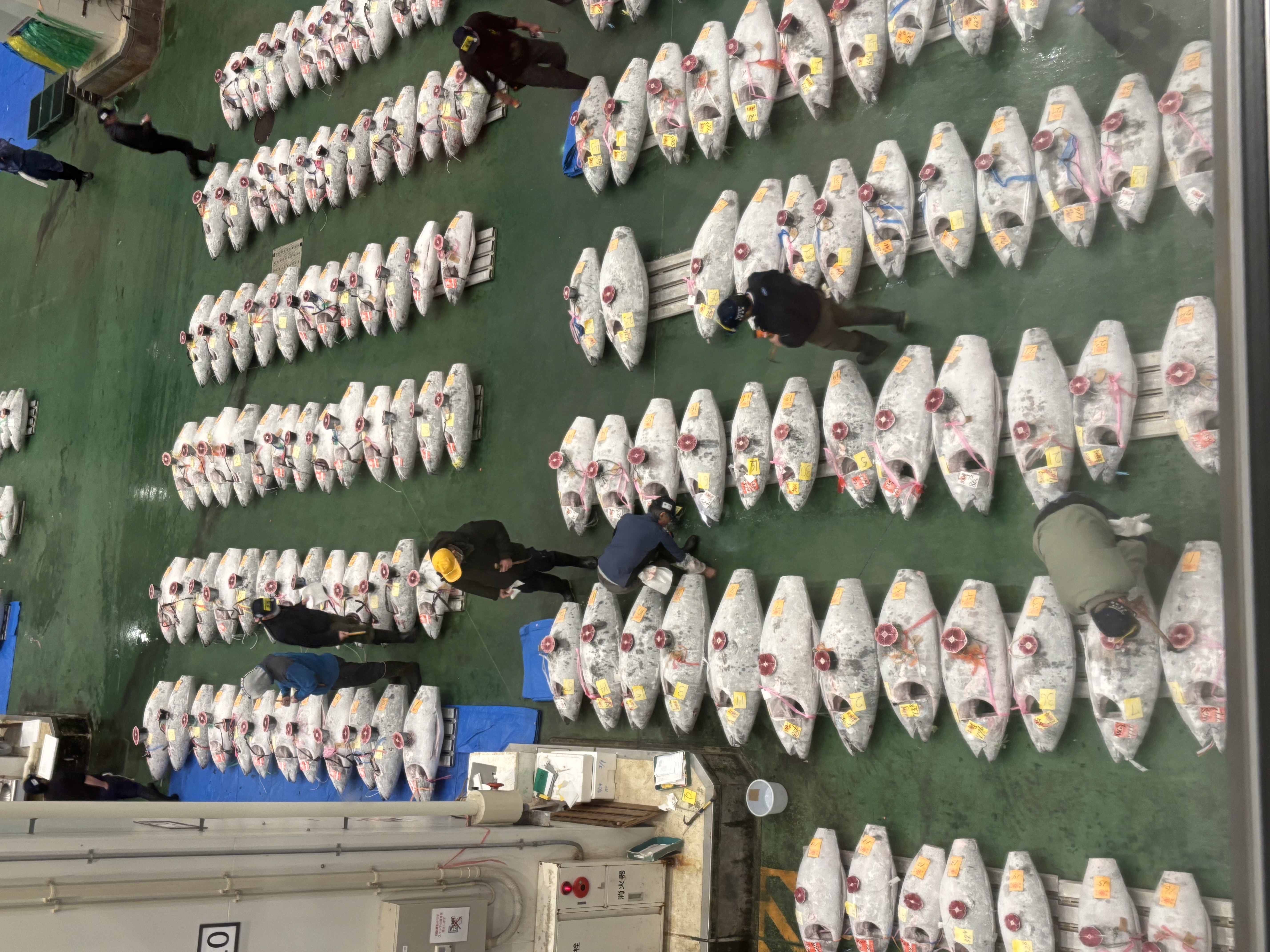
If you search for the “Tokyo fish market,” most results still point to Tsukiji. But the wholesale market — the famous tuna auction — moved to Toyosu Market in 2018. Toyosu is now one of the largest fish markets in the world, and unlike the old site it’s a sealed, temperature-controlled complex built around food safety, so the catch stays cold from the dock to the counter. Tsukiji’s outer market is still a great place to eat, but if you want to see the real thing, Toyosu is where you go.
This guide covers everything you need for one morning at Toyosu Fish Market: how to get there, when it’s open, how to watch the tuna auction, where to eat sushi, and what to do after. I live in Tokyo and took every photo in this post myself.
How to Get to Toyosu Market
The nearest station is Shijo-mae Station on the Yurikamome Line. A covered walkway links the station with the market halls.
- From Shimbashi: take the Yurikamome toward Toyosu and get off at Shijo-mae.
- From Toyosu Station (Yurakucho Line): it’s two stops on the Yurikamome.
- From Tokyo Station: hop on the JR Yamanote Line for two stops to Shimbashi and change to the Yurikamome. The elevated track runs along the bay, so grab a window seat.
- By taxi: tell the driver “Shijo-mae Station” — taxis can’t drop you at the market gates.
Tip: the first trains arrive a little too late for the start of the tuna auction. If the auction is your goal, plan on a taxi.
Toyosu Market Hours & Closed Days
- Market hours: 5:00 am – 5:00 pm
- Shops and info center: from about 7:00 am
- Restaurants: from about 7–8 am; many close after lunch or when they sell out
- Closed: Sundays, national holidays, and most Wednesdays
- Admission: free
The closed days change every month, so check the official Toyosu Market calendar before you go. Arriving on a closed Wednesday is the most common mistake visitors make.
Inside the Tuna Trade: Why Toyosu Matters
Toyosu isn’t just a tourist stop. A huge share of the tuna that ends up in sushi bars — in Japan and abroad — is priced and sold here first.
- Where the price is set: buyers for restaurants and trading companies bid on tuna landed all over Japan and shipped in from overseas. What happens on this floor ripples out to sushi menus around the world.
- A launch point for exports: top-grade Japanese seafood is packed and sent abroad from here, timed so it lands in prime condition.
- Cold chain and expert eyes: fish are kept in temperature-controlled halls, and seasoned buyers judge each tuna by its color, fat and texture before they bid.
- How the chain works: a small number of big wholesale companies auction the catch to licensed middlemen (nakaoroshi), who then sell on to restaurants, shops and supermarkets. The middlemen work in Block 6 — which is why the sushi counters are there too.
How to Watch the Tuna Auction
The tuna auction starts around 5:45 am and usually wraps up by about 6:30. Some mornings it’s over in twenty minutes, so being late means missing it.
There are three ways to watch:
1. Upper viewing gallery (no booking)
- Free, first come, first served
- You look down on the floor through glass
2. Lower observation deck (apply in advance)
- Free, but you apply online and there’s a lottery if it’s full
- You stand right by the auction floor, behind a railing instead of glass
- About 100 people per morning
- Applications start in the first days of the month before your visit
3. A guided tour
- No lottery to worry about
- A guide explains the hand signals buyers use to bid, how the different kinds of tuna are graded, and answers your questions
Applications for the lower deck are taken on the official Toyosu Market website (there’s an English page). If you can’t get a spot, the upper gallery is still worth it — just get there by 5:30 am for a place at the glass.
What I’d do: take a taxi to arrive around 5:15, watch from the gallery, then head straight to breakfast before the sushi lines get long.
Where to Eat Sushi at Toyosu Market
Breakfast sushi is the reason most people come. The restaurants are spread across three buildings, and the busiest ones have queues before 8 am.
- Fisheries Intermediate Wholesale Building, 3F: the biggest cluster of sushi and seafood-bowl counters. Go early.
- Management Facilities Building, 3F: a few more sushi counters, often a little calmer.
- Fruit & Vegetable Building, 1F: home of Daiwa Sushi, one of the few spots here that takes reservations.
A set of nigiri at the market usually costs a few thousand yen. Bring cash — not every counter takes cards.
Sushi Dai: Is the Famous Line Worth It?
Sushi Dai is the counter with the longest line at Toyosu. With so many sushi spots in the same building, you might expect them all to be about the same. They aren’t — Sushi Dai once held a Michelin star, and that reputation is why so many visitors happily wait hours for a seat.
- No advance reservations. You queue up early, and staff hand you a time to come back. Arrive early and you may get a slot around lunchtime; once the day’s slots are gone, that’s it.
- Budget: around ¥7,000 for the omakase set. Cash only.
- Where: 3F, Fisheries Intermediate Wholesale Building (Block 6)
Senkyaku Banrai: The Food Hall Next Door
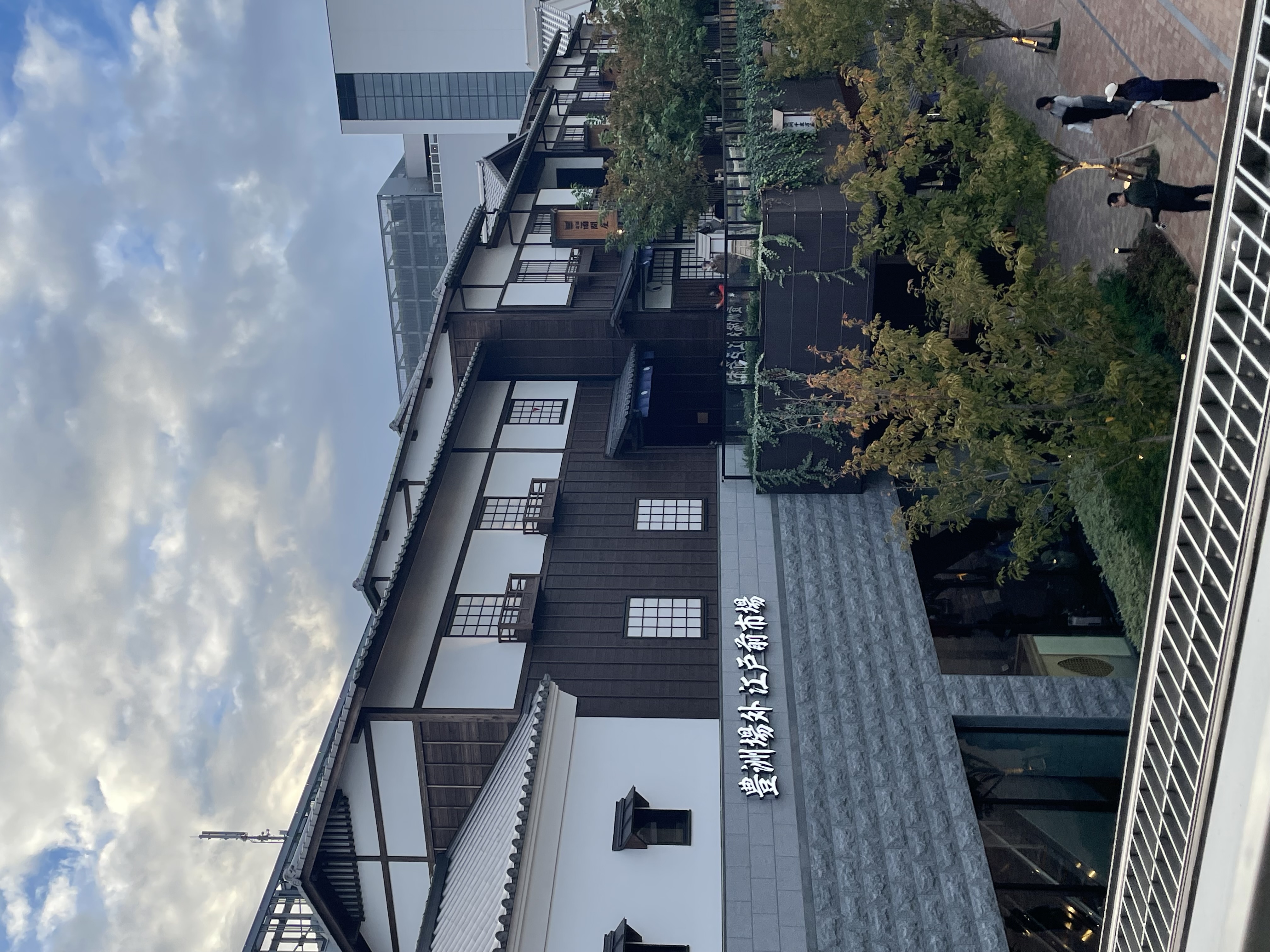
Most Toyosu guides stop at the auction and the sushi counters. Don’t. Right beside the market is Toyosu Senkyaku Banrai, which opened in February 2024 and is still missing from a lot of older guides.
It’s built to look like an Edo-period street, with around 70 shops selling grilled seafood, eel, ramen, sweets and souvenirs. Entry is free, and it keeps going long after the market’s restaurants have closed.
- Shops: roughly 10 am – 6 pm
- Restaurants: roughly 10 am – 10 pm
- Free foot bath: on the 8th floor, 9 am – 10 pm
- Toyosu onsen: the Tokyo Toyosu Manyo Club, a paid hot-spring spa open 24 hours
- Walk from Shijo-mae Station: about 4 minutes
If you’ve been up since 5 am for the auction, a soak in the onsen is the best way to finish the morning.
Want to add some old Japan to your trip? Around the market you can also book hands-on cultural activities — a ninja class, a samurai sword show, or dressing up in a kimono for photos.
Toyosu Market Map: How the Buildings Fit Together
Toyosu is three separate buildings joined by walkways — two for seafood and one for fruit and vegetables. That layout confuses a lot of first-time visitors, so think of it like this:
- Tuna auction: the Fisheries Wholesale Building (Block 7)
- Sushi Dai + most sushi counters: the Fisheries Intermediate Wholesale Building (Block 6)
- Daiwa Sushi + produce market: the Fruit & Vegetable Building
- Food hall + onsen: Senkyaku Banrai, just outside the market
Toyosu vs Tsukiji: Which Should You Visit?
They’re different experiences, and many people do both.
- Go to Toyosu if you want the tuna auction, a look at how Japan’s seafood business really runs, and a quieter, more organized sushi breakfast.
- Go to Tsukiji Outer Market if you want to wander, snack from street stalls and shop for kitchen knives.
- Do both: start at Toyosu before sunrise and save Tsukiji for a mid-morning snack. It’s about 20 minutes by taxi.
Pair It With teamLab Planets
teamLab Planets is one stop away at Shin-Toyosu Station on the same Yurikamome Line. Book a mid-morning time slot in advance, and you can go straight from breakfast to the art.
Is Toyosu Market Worth It?
Yes — if you go early, check the closed days, and treat it as a morning out rather than a quick stop. Come for the auction, stay for the sushi, and finish at Senkyaku Banrai.
Want the short version and a monthly market report in your inbox? Subscribe on Substack.